Caffeine hasn’t changed.
But how people use it, and more importantly how it feels, has.
Most people still treat caffeine like a blunt instrument. You’re tired, so you reach for something strong. Coffee, an energy drink, maybe a pill. It works, at least at first. You feel more awake, a bit sharper, more capable of pushing through whatever’s in front of you.
But over time, something starts to break down.
The same dose doesn’t hit the same way. The energy feels less clean. You’re more wired, less focused. Sleep starts slipping, and suddenly caffeine isn’t solving the problem anymore, it’s quietly contributing to it.
That’s why the conversation around caffeine has shifted from how much to how it’s delivered.
If you’re comparing caffeine pills vs energy drinks, you’re already asking a better question than most. But to answer it properly, you need to understand that these aren’t just two formats. They represent two completely different approaches to energy.
Why Caffeine Still Works, and Where It Starts to Fail
At a biological level, caffeine is simple. It blocks adenosine, the neurotransmitter that signals fatigue, which is why you feel more awake after taking it. It also increases activity in the central nervous system, which improves alertness, reaction time, and perceived energy.
That’s why it shows up everywhere. Work, training, studying, long drives, early mornings with kids. It’s one of the few compounds that reliably improves performance across both cognitive and physical domains.
The issue isn’t whether caffeine works. It does.
The issue is that most people are using it in a way that creates instability rather than consistency.
The spike becomes the goal, instead of sustained performance. And once you’re chasing spikes, you’re almost guaranteed to run into the same pattern: short-term gain, followed by diminishing returns.
That’s where format starts to matter.
Caffeine Pills vs Energy Drinks: The Difference Most People Miss
On paper, both caffeine pills and energy drinks do the same thing. They deliver caffeine into your system.
In practice, they behave very differently.
The cleanest way to think about it is this:
Caffeine pills are a dosing tool.
Energy drinks are a delivery experience.
That distinction changes everything.
Caffeine pills are built around control. You know exactly how much caffeine you’re taking, whether it’s 50 mg, 100 mg, or 200 mg. There are no additional variables unless you deliberately add them. No sugar, no flavor systems, no hidden stimulant blends. Just caffeine, delivered in a precise and predictable way.
Energy drinks are the opposite. They’re a bundle. You’re not just consuming caffeine, you’re consuming a mix of ingredients designed to create an immediate sensory and psychological effect. Flavor, carbonation, sweetness, acidity, often multiple caffeine sources, and sometimes additional compounds layered in without much transparency.
This is where things start to get less predictable.
According to the FDA, energy drinks can range anywhere from 54 mg to 328 mg of caffeine per 16 oz. That’s a massive spread, especially for something people often treat as a single, standard unit.
So while both formats deliver caffeine, one prioritizes precision, and the other prioritizes experience.
The Case for Caffeine Pills: Precision, Simplicity, and Consistency
If your goal is consistent performance, caffeine pills tend to outperform energy drinks for a simple reason. They reduce variables.
When you remove sugar, artificial sweeteners, and additional stimulants, you’re left with a cleaner signal. You can adjust your dose with intention, test what actually works for your body, and repeat it reliably.
That matters more than most people think.
Performance isn’t just about getting a boost. It’s about getting a boost you can replicate. And that’s where pills tend to win.
They’re also easier to integrate into a broader system. You can combine caffeine with other compounds like L-theanine or L-tyrosine, depending on what you’re trying to optimize for. Focus, calmness, endurance, or cognitive control.
But pills aren’t perfect.
The same precision that makes them effective also makes them easy to misuse. If you jump straight into higher doses, especially 200 mg or more, you can overshoot quickly. And because there’s no natural pacing mechanism like sipping a drink, you’re committing to the full dose all at once.
That’s where many people run into the classic caffeine problems. Jitters, anxiety, scattered thinking, and disrupted sleep.
So while pills solve the unpredictability of energy drinks, they don’t automatically solve the experience of caffeine.
The Case for Energy Drinks: Convenience, Ritual, and Immediate Impact
Energy drinks exist for a reason.
They’re accessible, familiar, and designed to feel good immediately. There’s a ritual to opening a can, taking that first sip, and feeling the shift. For a lot of people, that matters just as much as the actual caffeine.
They also remove friction. You don’t need to think about dosing, stacking, or timing. You just drink it and go.
But that simplicity comes at a cost.
Because energy drinks combine multiple variables, caffeine content, sweetness, acidity, and often multiple stimulant sources, the experience becomes less stable. You might feel great one day and overstimulated the next, even with the same product.
They also make it easier to drift into higher total intake. One drink turns into two, or gets layered on top of coffee, and suddenly you’re well past your ideal range without realizing it.
That’s how people end up in the loop that quietly undermines performance. Too much caffeine, poorer sleep, reduced recovery, and a growing dependence on stimulation just to feel baseline.
Why Neither Option Fully Solves the Problem
If you step back, both caffeine pills and energy drinks are solving part of the equation, but not all of it.
Pills solve for control, but they don’t inherently improve how caffeine feels.
Energy drinks solve for experience, but they introduce too many variables to stay consistent.
The missing piece for most people is this:
Caffeine isn’t just about stimulation. It’s about usability.
It’s not enough to feel more awake. You need to feel focused, stable, and in control of that energy.
That’s where the conversation has shifted over the last few years.
The Rise of Smarter Caffeine Stacks
Instead of asking whether to use caffeine pills or energy drinks, more people are starting to ask a better question:
How do I make caffeine work better?
One of the most researched and widely used answers is the combination of caffeine with L-theanine.
L-theanine, an amino acid found naturally in tea, has a unique effect. It promotes a state of calm alertness, which complements caffeine’s stimulating effect. Instead of amplifying the stimulation, it balances it.
The result is a different kind of energy. Less jittery, less anxious, more controlled.
Instead of feeling wired, you feel locked in.
That shift, from raw stimulation to controlled focus, is what most people are actually looking for, even if they don’t articulate it that way.
Why More People Are Moving Toward Functional Formats
This is where a third category has started to emerge.
Not pills. Not drinks.
Functional formats that combine precision with experience.
Instead of forcing you to choose between control and convenience, these products are designed to deliver both, while also improving the quality of the energy itself.
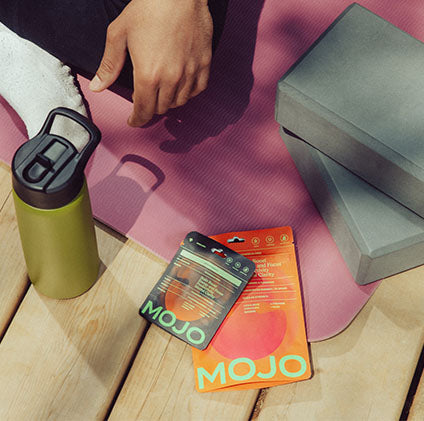
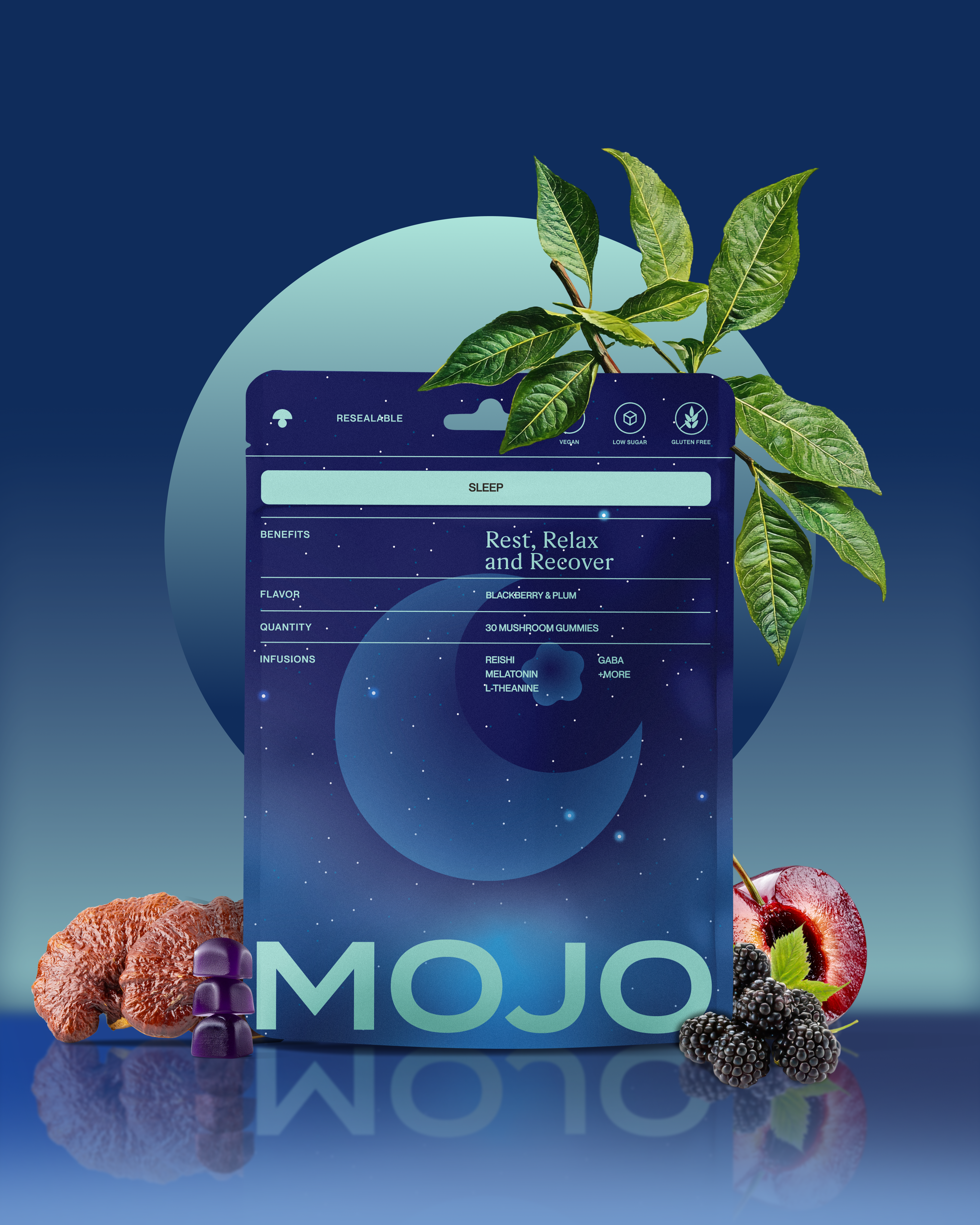
That’s where Mojo comes in.
Why Mojo Is a Better Alternative to Both
Mojo was built around a simple idea.
Caffeine shouldn’t feel like a tradeoff.
It shouldn’t give you energy at the expense of calm, or focus at the expense of sleep later on. It should enhance performance without introducing instability.
That’s why the formulation is different from both traditional caffeine pills and energy drinks.
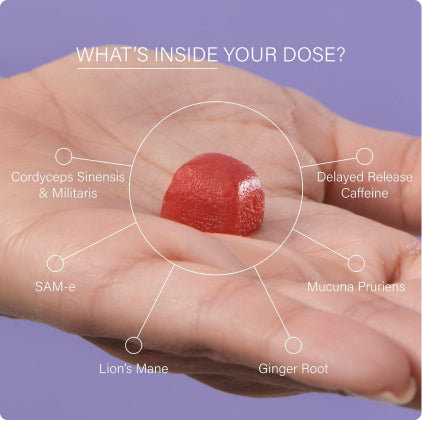
Instead of relying on a high, fast-acting dose, Mojo uses slow-release caffeine, which creates a more gradual and sustained increase in energy. You don’t get the sharp spike that leads to a crash. You get a smoother curve that’s easier to work with.
That alone changes the experience significantly.
Then there’s the inclusion of L-theanine, which is already built into the formula. You don’t have to think about stacking or ratios. It’s designed to take the edge off the caffeine, reducing jitteriness and helping maintain a more stable, focused state.
On top of that, Mojo includes functional ingredients like Lion’s Mane and Cordyceps, which support cognitive performance and energy at a deeper level. Instead of just stimulating the system, it supports it.
The result is something that sits in between pills and drinks, but ultimately improves on both.
You get the control and consistency of a measured dose, the ease and enjoyment of a simple format, and a noticeably better quality of energy.
Final Verdict: What Should You Actually Use?
If you’re choosing strictly between caffeine pills and energy drinks, the answer is fairly straightforward.
Caffeine pills are the better tool for consistency and control.
Energy drinks are more convenient, but less predictable and easier to overuse.
But the more complete answer is this:
Neither is the end state.
The real shift is toward better-designed caffeine experiences, where the goal isn’t just to feel more awake, but to feel more capable, more focused, and more stable throughout the day.
That’s where smarter formulations, especially those that combine controlled caffeine with L-theanine and functional support, are starting to outperform both traditional options.
Because at a certain point, it’s not about how much energy you have.
It’s about how well you can use it.
Table of contents