In the summer of 1964, a 17-year-old student named Randy Gardner decided to attempt something that sounded more like a stunt than science. Alongside two friends and with guidance from researchers, he wanted to see how long a human being could stay awake. No stimulants. No special equipment. Just sheer willpower and curiosity.
At first, the experiment seemed almost amusing.
Day one passed with little more than fatigue. Day two brought irritability and difficulty concentrating. By day three, things became noticeably stranger. Gardner struggled to focus on conversations. His short-term memory began to fail. He became clumsy, emotionally erratic, and increasingly detached from reality.
As the days continued, the symptoms intensified.
He reportedly began hallucinating. At one point, he believed a street sign was a person. Another time, he became convinced he was a famous athlete. His speech slowed. His reactions deteriorated. Simple mental tasks became difficult. Even more fascinating to the researchers observing him was the fact that Gardner himself often insisted he felt relatively okay.
That detail became one of the most important findings of the entire experiment.
The human brain is remarkably bad at recognizing its own cognitive decline when sleep deprived. As exhaustion increases, self-awareness often decreases alongside it. In other words, the more impaired you become, the less capable you are of accurately judging your own impairment.
That sounds dramatic, until you realize how relevant it is to modern life.
Millions of people today operate in a permanently sleep-deprived state without fully recognizing how much it is affecting them. They normalize brain fog, low energy, irritability, poor focus, emotional volatility, forgetfulness, and afternoon crashes because the decline happens gradually. It becomes their baseline.
Eventually, after 11 straight days awake, Randy Gardner finally went to sleep.
Scientists expected a catastrophic recovery process. Instead, what happened was surprisingly revealing. His body immediately prioritized deep restorative sleep. Researchers observed that his brain desperately wanted recovery above everything else. Not distraction. Not entertainment. Not stimulation. Sleep.
And not just any sleep.
Deep sleep.
Modern neuroscience now understands that deep sleep is one of the most biologically important processes the human body undergoes. During deep sleep, the brain clears metabolic waste, regulates neurotransmitters, consolidates memory, repairs neural pathways, restores dopamine sensitivity, supports immune function, and recalibrates emotional regulation.
In simple terms, deep sleep is maintenance mode for the brain.
Without enough of it, things begin quietly breaking down.
Focus becomes harder. Motivation drops. Stress tolerance shrinks. Emotional reactions become sharper. Patience disappears faster. Productivity suffers. Cravings increase. Recovery slows. Memory weakens. Many people interpret these symptoms as personality flaws, lack of discipline, aging, burnout, or even anxiety, when in reality they may simply be chronically under-recovered.
What makes the Randy Gardner experiment feel so strangely modern is that we have unintentionally recreated milder versions of it at scale.
Late-night scrolling. Blue light exposure. Constant notifications. Chronic stress. Excess caffeine. Shift work. Streaming platforms. Endless stimulation. Modern life has turned poor sleep into something people almost brag about.
“Running on four hours.”
“I’ll sleep when I’m dead.”
“Busy season.”
But biologically, the brain does not adapt to sleep deprivation nearly as well as people think it does. Research consistently shows that reaction time, focus, cognitive performance, decision-making, and emotional regulation all decline significantly with insufficient sleep, even when people subjectively believe they are functioning normally.
That disconnect matters.
Because many people spend years chasing productivity hacks while ignoring the single most foundational variable underneath performance: recovery.
Sleep is not just rest. It is infrastructure.
It affects how you think, feel, work, train, parent, communicate, and recover. It influences nearly every system in the body. The difference between feeling sharp and feeling mentally scattered is often less about motivation and more about whether your brain actually recovered the night before.
This is also why interest in sleep support has exploded in recent years. People are beginning to realize that energy and focus during the day are deeply connected to the quality of recovery at night.
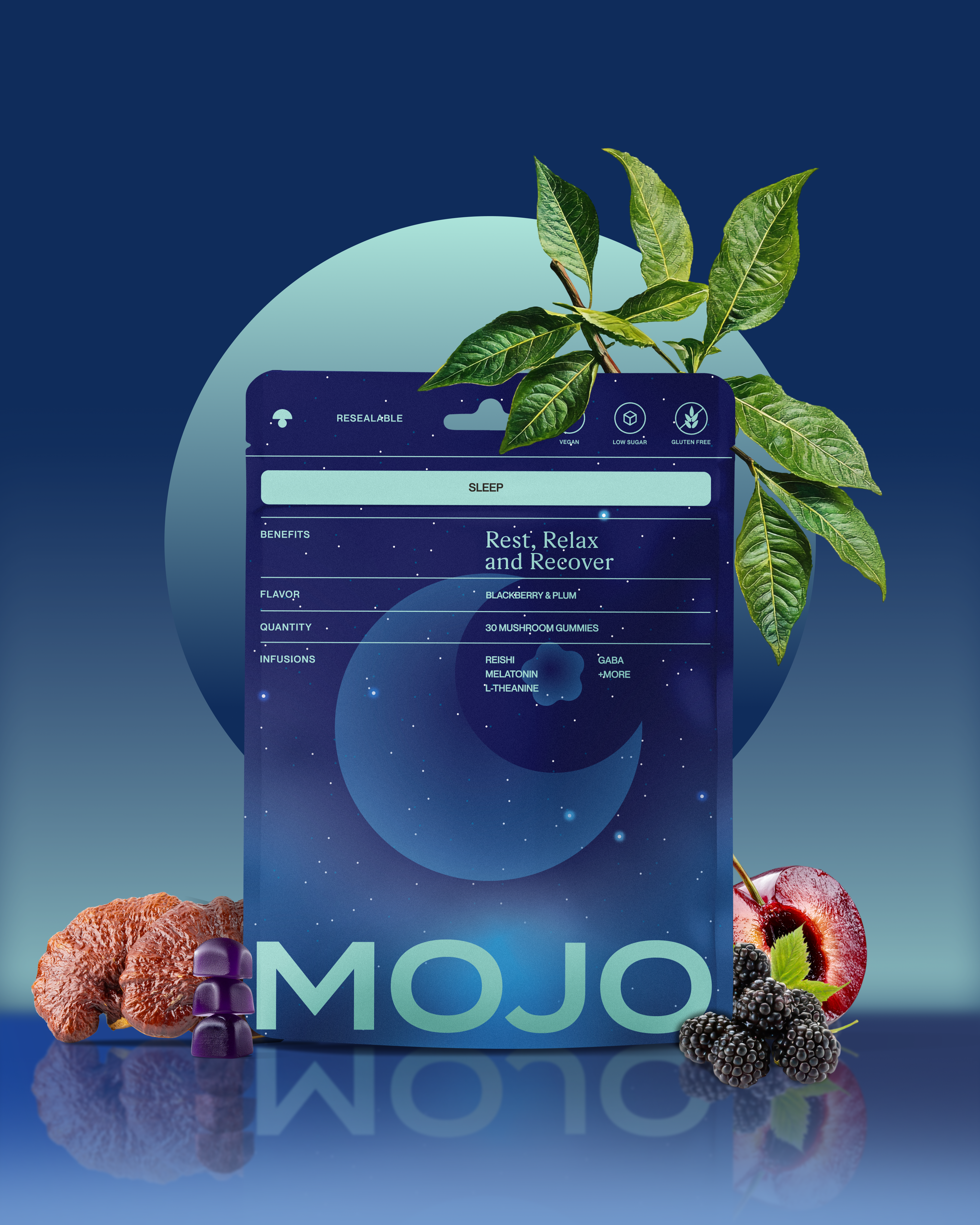
That philosophy sits behind Mojo Sleep Gummies.
The goal was never to create something that simply knocks people out or leaves them feeling groggy the next morning. The goal was to support deeper, more restorative sleep in a world that constantly works against it.
That is why Mojo Sleep Gummies include ingredients like magnesium glycinate, L-theanine, melatonin, and functional mushrooms like reishi. Each ingredient was chosen to support relaxation, recovery, and sleep quality without creating the heavy, sedated feeling many people associate with traditional sleep aids.
Because the real goal is not unconsciousness.
It is recovery.
The version of you that feels calmer, more focused, more emotionally balanced, and more productive during the day often starts with what happened the night before.
And maybe that is the strangest lesson from a teenager staying awake for 11 days.
The brain can survive a shocking amount of stress.
But it never stops trying to get back to sleep.
Table of contents