For most of human history, people have been looking for things that make them want sex more.
Oysters. Chocolate. Ginseng. Horns from unfortunate animals. Mysterious roots. Spanish fly.
Entire industries have been built around the idea of the aphrodisiac: eat this strange thing and suddenly you're ready to tear someone's clothes off.
But modern science has revealed something much more interesting about desire.
Sometimes the problem isn't that we need to add more stimulation.
It's that modern life gives our brains almost no opportunity to switch off.
Your brain has competing priorities
Sexual desire doesn't exist in isolation.
Your brain is constantly deciding what deserves your attention.
Work.
Kids.
Money.
Notifications.
The email you forgot to send.
The thing somebody said in a meeting six hours ago that you're still inexplicably thinking about.
And somewhere underneath all of that is your partner saying, "Hey..."
This matters because desire is affected by far more than hormones. Psychological stress, fatigue, relationship dynamics, attention and emotional state can all influence whether we're actually interested in sex.
Which means the question isn't always:
How do I increase my libido?
Sometimes it's:
What is getting in the way of it?
And humans have apparently been experimenting with that question for a very long time.
A strange plant from South Africa
Long before "adaptogen" became something printed on a wellness package, Indigenous San and Khoikhoi people in southern Africa were using a succulent called Sceletium tortuosum.
Today, most people know it as Kanna.
It was traditionally chewed, fermented, smoked or brewed, and historical accounts describe its use around mood, stress, hunger, thirst and social connection.
Eventually scientists became interested in what was actually happening inside the plant.
Kanna contains naturally occurring alkaloids including mesembrine and mesembrenone. Laboratory research suggests compounds in standardized Kanna extracts interact with serotonin transport and an enzyme called phosphodiesterase-4, or PDE4.
And some small human studies have produced intriguing results.
In one brain-imaging study, a standardized Kanna extract reduced activity in neural circuitry associated with processing threat. Another small placebo-controlled experiment found lower measures of anxiety during a laboratory stress task.
That's interesting.
But it's important not to turn "interesting" into "proven." The human research on Kanna is still relatively small, and a systematic review found there wasn't enough evidence to conclude that it reliably treats anxiety.
Still, it raises a fascinating possibility when we think about desire.
Because sometimes feeling sexy isn't about becoming more stimulated.
Sometimes you need to become less preoccupied.
Then there's the zombie fungus
If Kanna's history is interesting, Cordyceps is downright bizarre.
Certain species of Cordyceps are parasitic fungi.
They infect insects, grow inside them and eventually produce a fruiting body from the unfortunate host.
Nature is lovely.
For centuries, however, Cordyceps has also occupied a very different place in traditional Asian medicine, where it became associated with vitality, stamina and sexual function.
That reputation eventually made its way into modern sports and supplement culture.
Scientists have investigated Cordyceps for its potential effects on exercise capacity, oxygen utilization and fatigue. Some human studies have reported improvements in certain measures of exercise performance, while others haven't.
A recent review of the human research described the results as promising in places but inconsistent overall.
So again: fascinating biology and centuries of traditional use, but not magic.
And definitely not powdered Viagra.
Which brings us back to libido
The combination of these two ingredients points toward a more useful way of thinking about desire.
Rather than imagining libido as a single dial marked:
NOT HORNY ←────────→ HORNY
think of it as the result of an entire system.
You need enough physical energy.
You need enough mental bandwidth.
You need the ability to shift attention away from tomorrow's presentation, the laundry, Slack, Instagram and whether you remembered to pay the dentist.
You need to actually be there.
That's part of what makes modern libido such an interesting problem.
We've created a world incredibly good at keeping us activated... but not necessarily present.
We sit down to watch television while holding another screen.
We answer work messages from bed.
We take our phones to the bathroom.
We know what 600 people we barely know did on vacation.
Then at 10:47 PM we're somehow surprised that our brains don't instantly transition from Q3 revenue forecast to seduction.
Maybe desire doesn't always need another hack.
Maybe it needs a little room.
The oldest problem meets modern life
Humans have been experimenting with plants, fungi and rituals around energy, mood, connection and desire for thousands of years.
Today we can finally start examining some of those traditions through the lens of neuroscience, physiology and controlled research.
And Cordyceps and Kanna are two particularly fascinating examples.
Not because either one is a magical aphrodisiac.
But because they sit at the intersection of two things modern life has become exceptionally good at stealing from us:
energy and presence.
And it turns out those might matter to your sex life more than any oyster ever did.
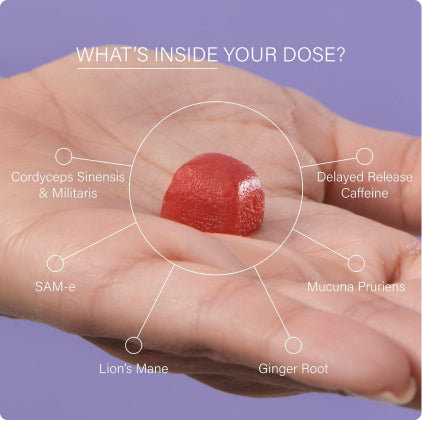
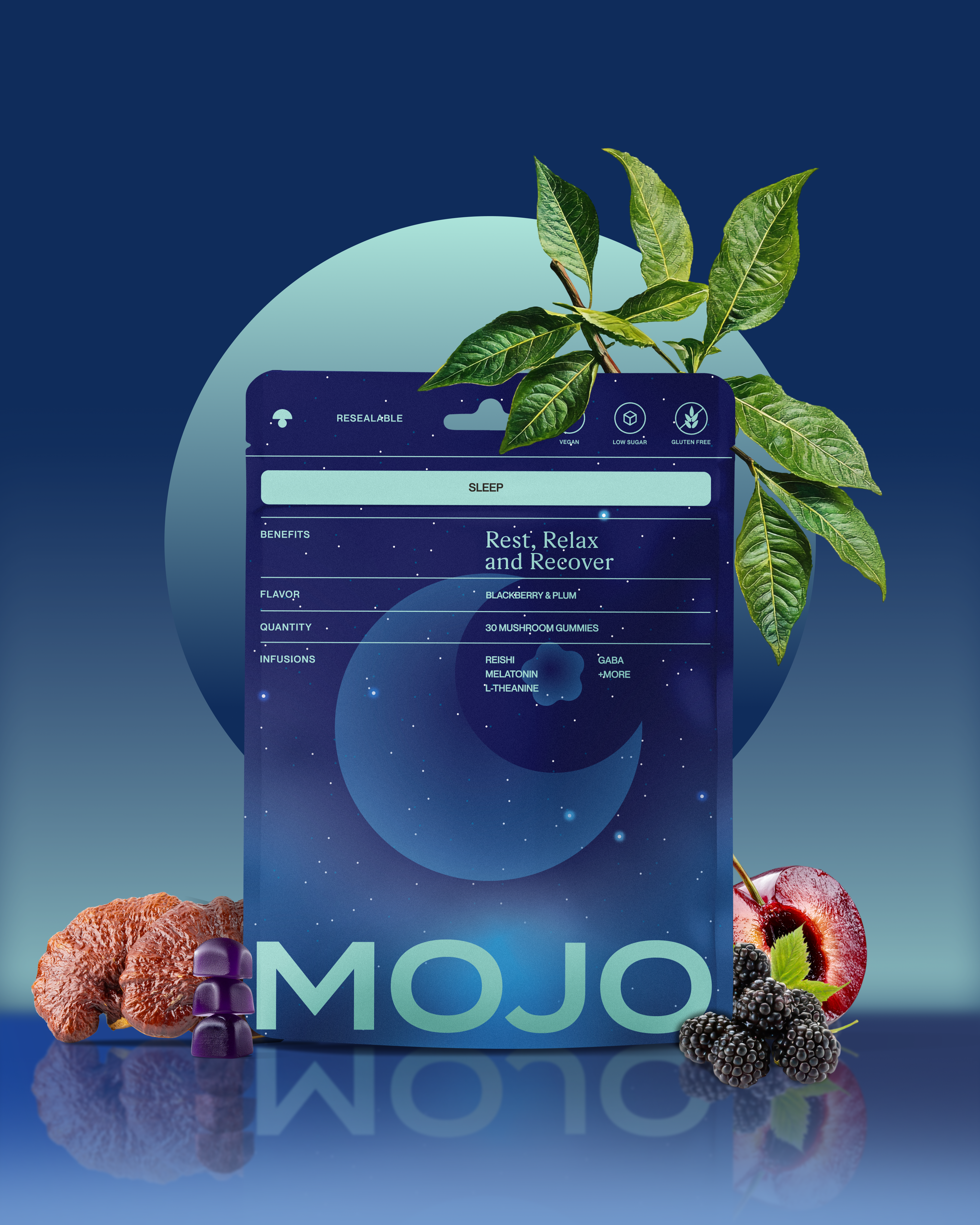
Which is exactly why they're in Mojo Libido
Mojo brings both sides of that story together.
It contains Cordyceps and Kanna, alongside a broader blend designed for the very modern problem we just spent an entire article talking about: getting out of your head, reconnecting with your body and actually being present for the moment.
Because great sex isn't just about turning desire up to eleven.
Sometimes it's about giving desire enough space to show up in the first place.
Less thinking. More feeling. That's the idea behind Mojo Libido.
Table of contents