Imagine being told that one of the most interesting places to study ADHD isn't inside the brain.
It's inside your intestines.
For decades, scientists studying Attention Deficit Hyperactivity Disorder have focused primarily on the brain. They've investigated dopamine, genetics, neural pathways and the systems responsible for attention, motivation and impulse control.
And for good reason. ADHD is a neurodevelopmental condition with a substantial genetic component.
But a growing body of research is exploring another potential piece of the puzzle.
The trillions of microorganisms living inside your digestive system.
And what scientists are discovering is raising some fascinating questions about the relationship between our gut and our minds.
Your Gut Has a Direct Line to Your Brain
Your digestive system is home to an extraordinary ecosystem of bacteria, fungi and other microorganisms collectively known as the gut microbiome.
These microorganisms help break down food, produce certain vitamins, interact with your immune system and influence the chemical environment inside your body.
But here's where things get interesting.
Your gut and brain are in constant communication.
Scientists call this the gut-brain axis, a complex network connecting your digestive system and central nervous system.
One important part of that network is the vagus nerve, which carries signals between the brain and several internal organs.
Your gut also contains its own extensive nervous system, known as the enteric nervous system, sometimes nicknamed the second brain.
And the bacteria living in your digestive tract can influence this communication through chemical signals, immune activity and the substances they produce when digesting food.
In other words, your gut isn't simply receiving instructions from your brain.
It's participating in a two-way conversation.
And researchers are increasingly interested in whether that conversation might influence conditions such as ADHD.
The Dopamine Connection
One of the most intriguing connections involves dopamine.
Dopamine is often described as the brain's pleasure chemical, but that's an oversimplification.
It plays an important role in motivation, learning, reward processing and the regulation of attention.
These are also systems closely associated with ADHD.
Interestingly, certain gut bacteria can influence the production or availability of compounds involved in neurotransmitter pathways.
That doesn't mean gut bacteria directly control the dopamine levels in your brain. The biology is considerably more complicated.
But it does suggest that the microbiome may influence some of the chemical signalling systems involved in brain function.
And researchers have started looking for differences between the gut microbiomes of people with ADHD and those without it.
What Scientists Actually Found
Researchers studying the relationship between ADHD and the gut microbiome have identified some intriguing differences.
A 2025 systematic review examined 14 studies involving 1,319 participants.
The researchers found that people with ADHD showed differences in the abundance of certain types of gut bacteria compared with people without ADHD.
One particularly interesting finding involved a group of bacteria called Faecalibacterium.
These bacteria help produce substances known as short-chain fatty acids, including butyrate.
Butyrate is important because it helps support the intestinal lining and participates in processes involved in immune regulation.
Some studies found lower levels of Faecalibacterium in people with ADHD.
Other bacterial groups also appeared to differ.
The researchers suggested that these changes might be connected to pathways involving inflammation and neurotransmitter signalling.
But there was an important catch.
The findings weren't consistent across every study, and scientists couldn't establish whether the microbial differences were a cause or consequence of ADHD.
Still, the research pointed toward an interesting possibility.
Could some of the biology associated with ADHD extend beyond the brain itself?
The Inflammation Question
Another area attracting scientific attention is inflammation.
Your immune system and brain communicate constantly.
And your gut microbiome plays an important role in regulating immune activity.
Certain gut bacteria produce compounds that help maintain the intestinal barrier and influence inflammatory signalling throughout the body.
Researchers are investigating whether changes in these processes might also affect brain function.
This is particularly interesting because inflammation and immune signalling have been implicated in several neurological and psychiatric conditions.
But the relationship is complicated.
Inflammation doesn't automatically cause ADHD, and having ADHD doesn't mean someone has an unhealthy gut.
What scientists are exploring is whether differences in immune activity and microbial metabolism could contribute to the broader biological picture.
And that brings us to another fascinating question.
Can Changing Your Gut Change Your Attention?
If gut bacteria influence pathways associated with brain function, could changing those bacteria improve ADHD symptoms?
Researchers have started testing that possibility.
Some studies have investigated probiotic supplementation in people with ADHD, including children and adults.
The results so far have been mixed.
Some individual studies have reported improvements in particular measures of behaviour or wellbeing.
Others have found little or no meaningful change in core ADHD symptoms.
A 2026 meta-analysis examining nine randomized trials involving 482 children and adolescents found no clear overall benefit from probiotics on ADHD-related clinical outcomes.
That's an important distinction.
Scientists have evidence that the gut microbiome and ADHD may be connected.
They do not yet have convincing evidence that probiotic supplements can reliably treat ADHD.
And there's currently no established microbiome-based treatment for the condition.
Nevertheless, the research is opening up new avenues for understanding how the gut and brain interact.
So What Should You Actually Do?
The encouraging part is that supporting your gut health doesn't require waiting for scientists to solve the ADHD puzzle.
There are already well-established reasons to look after your digestive system.
Eating a variety of fibre-rich plant foods helps nourish beneficial gut microorganisms.
Foods such as oats, beans, vegetables, fruit, nuts and whole grains provide compounds that gut bacteria can ferment.
That fermentation produces short-chain fatty acids, including the butyrate researchers are so interested in.
Fermented foods such as yogurt, kefir and kimchi can also contribute to a varied diet, although their effects on the microbiome depend on the food and the microorganisms involved.
Sleep, physical activity and overall dietary patterns matter too.
And while scientists continue investigating the microbiome's relationship with attention and behaviour, these habits support health regardless of whether someone has ADHD.
For people managing ADHD, they're complementary to established approaches, not replacements for professional assessment or treatment.
A Healthy Gut Is a Good Place to Start
For much of modern medical history, we've tended to study the body's systems separately.
The brain was the brain.
The digestive system was the digestive system.
And the immune system was something else entirely.
But biology doesn't operate in neat categories.
Your brain communicates with your gut.
Your gut interacts with your immune system.
And the microorganisms living inside you participate in a remarkable network of chemical signals.
Scientists are now trying to understand what happens when those systems interact differently.
The connection between ADHD and the gut microbiome is still an emerging area of research.
We don't know whether changing gut bacteria can meaningfully improve ADHD symptoms. But we do know that the trillions of microorganisms living inside us play an important role in digestion, immune function and overall health.
And looking after that ecosystem is something we can all do.
Eating more fibre, getting enough sleep, staying active and incorporating gut-supporting ingredients into your routine are all ways to give your digestive system some attention.
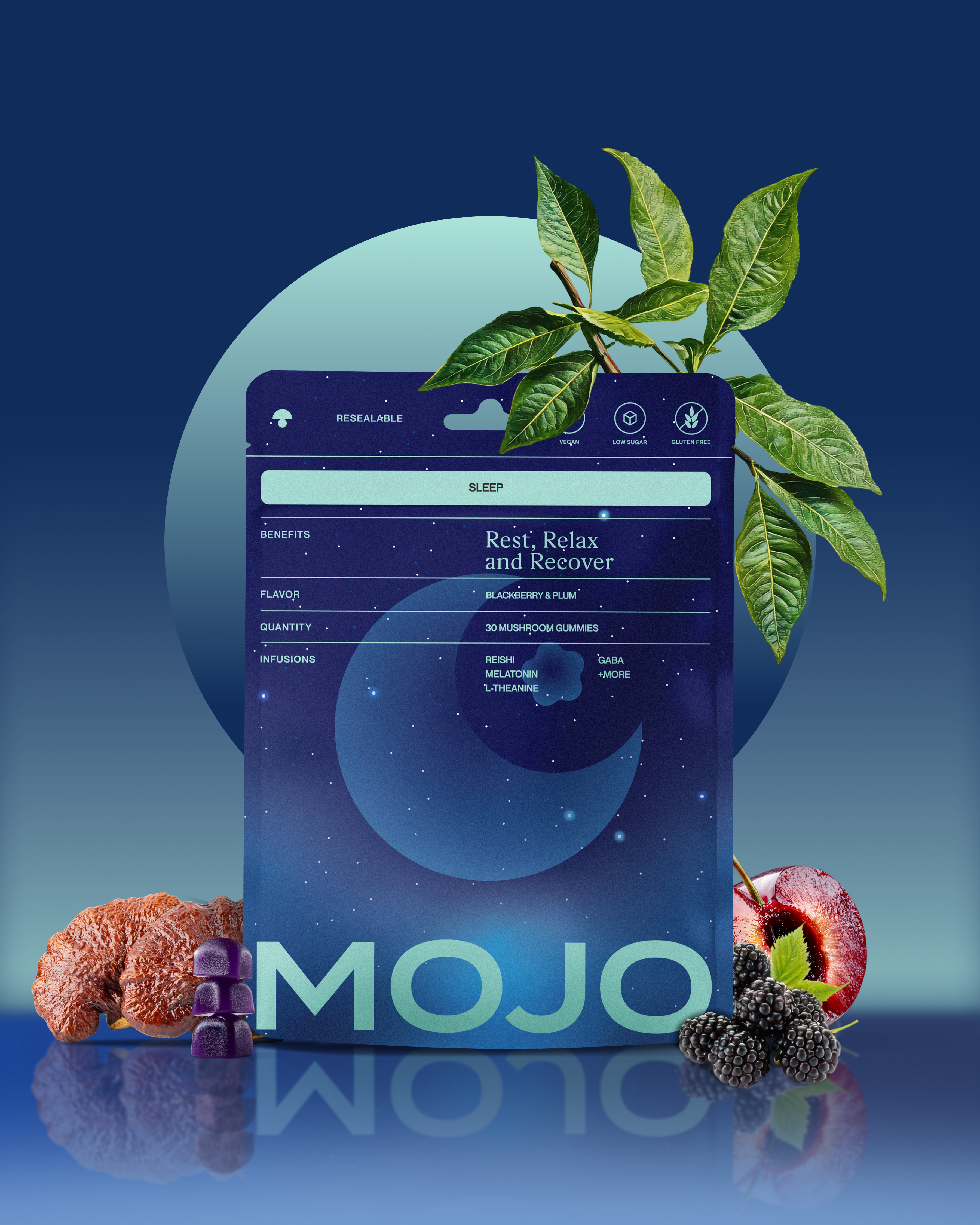
That's part of the thinking behind Mojo Gut Gummies.
Formulated with functional ingredients including Turkey Tail mushroom, traditionally valued for its naturally occurring polysaccharides, Mojo Gut is designed to complement your daily gut wellness routine.
Because while scientists are still discovering just how deeply our gut and brain are connected, one thing is already clear:
Taking care of your gut is an important part of taking care of yourself.
And that's a pretty good gut feeling.
Table of contents