When we talk about ADHD, we usually talk about focus.
Difficulty concentrating. Procrastination. Forgetfulness. Impulsivity. The never-ending struggle to get things done.
But what if ADHD affects something far more significant than your productivity?
What if it affects how long you live?
A major study published in The British Journal of Psychiatry in January 2025 revealed a startling association between ADHD and life expectancy.
The researchers estimated that adults diagnosed with ADHD could lose an average of:
-
6.8 years of life for men
-
8.6 years of life for women
Those are extraordinary numbers.
For context, they're approaching the estimated reduction in life expectancy associated with lifelong smoking.
But before you panic, there's something important to understand.
ADHD itself isn't necessarily what shortens your life. It's the accumulation of risks that can come with living with ADHD, particularly when it goes unrecognized or unmanaged.
And understanding those risks could make an enormous difference.
The Study That Changed the Conversation
Researchers at University College London examined health records from more than 30,000 British adults diagnosed with ADHD, comparing their mortality rates with those of adults without a recorded ADHD diagnosis.
The results suggested a substantial gap in life expectancy.
But there are important limitations.
The study was observational, meaning it identified an association rather than proving that ADHD directly causes premature death.
And because ADHD remains significantly underdiagnosed, particularly among adults, the people included in the study may not represent everyone living with the condition.
Those with a formal diagnosis could have had more severe symptoms or additional health conditions.
So these findings don't mean that everyone with ADHD should expect to die seven to nine years earlier.
They mean we need to take the broader health consequences of ADHD much more seriously.
Because the real story isn't about attention.
It's about what happens when difficulties with attention, planning, emotional regulation, and impulse control influence thousands of small decisions over a lifetime.
ADHD Is More Than a Focus Problem
Imagine forgetting to schedule a doctor's appointment.
Then forgetting to pick up a prescription.
Then struggling to maintain a consistent exercise routine.
Then reaching for convenience food because planning meals feels overwhelming.
Individually, none of these things seems particularly alarming.
But repeated over years or decades, they can have meaningful consequences.
ADHD affects executive functioning, the mental processes that help us plan, organize, prioritize, remember information, and regulate behaviour.
These processes are involved in almost every aspect of maintaining good health.
And research has associated ADHD with several significant health challenges.
1. Greater Risk of Accidents and Injuries
Impulsivity, distractibility, and difficulties with sustained attention can increase the likelihood of accidents.
Research has linked ADHD with higher rates of traffic collisions and unintentional injuries.
Something as seemingly minor as becoming distracted while driving can have serious consequences.
2. Increased Mental Health Challenges
ADHD frequently coexists with anxiety, depression, and other mental health conditions.
The relationship is complicated.
Living with untreated ADHD can create chronic stress, frustration, and feelings of underachievement. Meanwhile, other mental health conditions can make ADHD symptoms more difficult to manage.
Research has also identified an elevated risk of suicidal behaviour among people with ADHD.
This makes access to appropriate mental health support particularly important.
3. Difficulty Maintaining Healthy Habits
We know that regular exercise, adequate sleep, nutritious food, and preventive healthcare are important for long-term health.
Knowing what to do, however, isn't the same as consistently doing it.
For someone experiencing executive-function difficulties, maintaining healthy routines can require considerably more effort.
Meal planning, grocery shopping, scheduling exercise, and establishing regular sleep patterns can all become challenging.
Research has also found associations between ADHD and obesity, sleep disturbances, and other conditions that can influence long-term health.
4. Increased Risk of Substance Use
ADHD has been associated with higher rates of substance-use disorders.
For some individuals, impulsivity and difficulties regulating emotions may contribute to problematic substance use.
Alcohol and other substances can also become ways of coping with stress, restlessness, or emotional discomfort.
Over time, these patterns can create additional physical and mental health risks.
5. The Hidden Problem of Healthcare Avoidance
One of the most overlooked challenges is simply keeping up with healthcare.
Booking appointments.
Remembering medication.
Following treatment plans.
Attending follow-up visits.
Navigating insurance or healthcare systems.
These activities require precisely the executive-function skills that ADHD can make more difficult.
And when existing health conditions aren't managed consistently, the consequences can accumulate.
The Most Important Finding Isn't About Death. It's About Prevention.
Here's where the research becomes much more encouraging.
Many of the risks associated with ADHD are potentially modifiable.
A diagnosis can help people understand why certain behaviours and routines have been difficult to maintain.
More importantly, it can open the door to effective treatment and support.
A separate 2024 study published in JAMA, involving nearly 149,000 people with ADHD in Sweden, found that starting ADHD medication was associated with a lower risk of death over a two-year follow-up period.
The association was particularly notable for deaths from external causes, including accidents, suicide, and accidental poisoning.
The study doesn't prove that medication alone prevents premature death.
But it adds to growing evidence that identifying and appropriately treating ADHD can have benefits extending well beyond improved concentration.
Treatment may include medication, behavioural therapy, skills-based support, and practical changes to everyday routines.
The right approach depends on the individual.
And it's worth remembering that a diagnosis isn't a prediction of your future.
It's information that can help you make better decisions about it.
Five Everyday Habits Worth Prioritizing
If ADHD can make healthy routines more challenging, the solution isn't necessarily to develop more willpower.
It's to make those routines easier to maintain.
Here are five areas worth focusing on.
1. Make sleep a priority.
Consistent sleep supports attention, emotional regulation, and overall health.
Try maintaining regular bedtimes and wake-up times, reducing late-night screen exposure, and creating an environment that makes sleep easier.
2. Build movement into your day.
Physical activity supports cardiovascular health, mood, and cognitive functioning.
You don't need an elaborate exercise program.
Walking, cycling, strength training, or any activity you genuinely enjoy can help establish a sustainable routine.
3. Simplify your nutrition.
Healthy eating doesn't need to involve complicated meal plans.
Keeping nutritious foods readily available, eating regular meals, and reducing the number of daily food decisions can make consistency easier.
4. Externalize your memory.
Don't rely on remembering everything.
Use reminders, calendars, automatic prescription refills, and recurring appointments.
Creating systems that reduce the demands on working memory can make managing your health considerably easier.
5. Seek appropriate professional support.
If you suspect you have ADHD, consider speaking with a qualified healthcare professional.
And if you've already received a diagnosis, make sure you have a treatment and support plan that works for your circumstances.
ADHD is manageable, and support can make a meaningful difference.
Your Brain Health Is Part of Your Overall Health
One of the most important lessons from this research is that we need to stop thinking about brain health in isolation.
Attention, emotional regulation, sleep, nutrition, physical activity, and mental health are interconnected.
When one area becomes difficult to manage, the effects can ripple into others.
That's why supporting your brain isn't simply about being more productive.
It's about creating the conditions for better long-term wellbeing.
At Mojo, we're interested in the relationship between cognitive performance, nutrition, and everyday health.
Our approach to functional wellness focuses on helping people build sustainable routines and support their wellbeing through thoughtfully selected ingredients.
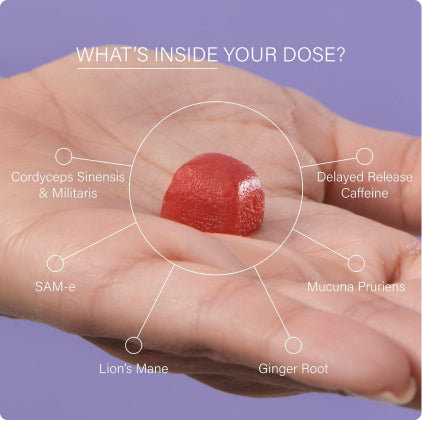
Products like Mojo Focus are designed to support everyday cognitive performance.
Ultimately, no supplement can substitute for adequate sleep, good nutrition, regular exercise, or appropriate professional treatment.
But a broader commitment to brain health can be a valuable part of looking after yourself.
The Bottom Line
The idea that ADHD could be associated with losing seven to nine years of life is understandably alarming.
But these numbers aren't destiny.
They're population-level estimates that reveal how significantly ADHD can influence health over time.
The encouraging part is that many contributing risks can be addressed through better awareness, appropriate treatment, and practical support.
Perhaps the biggest lesson is that ADHD deserves to be understood as more than an inconvenience or a productivity problem.
It's a condition that can affect nearly every aspect of a person's life.
And recognizing that is an important first step toward protecting both quality of life and long-term health.
Your brain health matters. Not just for what you accomplish today, but for the years ahead.
Sources and Further Reading
-
O'Nions et al. (2025). Life expectancy and years of life lost for adults with diagnosed ADHD in the UK: Matched cohort study. The British Journal of Psychiatry.
-
Li et al. (2024). ADHD Pharmacotherapy and Mortality in Individuals With ADHD. JAMA.
-
Yasmin Tayag (2025). ADHD's Sobering Life-Expectancy Numbers. The Atlantic.
-
National Institute of Mental Health. Attention-Deficit/Hyperactivity Disorder: What You Need to Know.
Table of contents