You know the feeling.
It’s 1:14 a.m. You should be asleep. Instead, your brain has decided this is the perfect moment to revisit something mildly embarrassing you said in 2017.
Then you start thinking about work.
Then money.
Then that weird pain in your shoulder.
Twenty minutes later, your career is collapsing, you probably have a rare disease, and you’re wondering whether everyone secretly hates you.
Then you wake up the next morning and...
Everything seems fine.
There’s actually a fascinating reason for this.
Researchers have proposed something called the “Mind After Midnight” hypothesis: the idea that when we’re awake during the biological night, our brains don’t operate quite the same way they do during the day.
Our circadian rhythms are built around being awake during daylight and asleep at night. When we push beyond that natural cycle, the systems involved in emotional regulation, reward, impulse control and decision-making can become less reliable.
Negative information can feel more important.
Rewards can become more tempting.
Our ability to regulate emotions can weaken.
In other words, your 1 a.m. brain isn't necessarily giving you profound insights. It might just be tired.
And that points to something bigger.
We tend to think of sleep as the opposite of productivity.
Eight hours where nothing gets done.
But biologically, almost the opposite is true.
While you sleep, your brain is consolidating memories, processing emotional experiences, regulating important systems and preparing the neural machinery you'll rely on the following day.
Sleep isn't your brain switching off.
It's your brain doing the work that makes tomorrow possible.
And when you consistently don't get enough of it, you don't just feel sleepy.
Attention suffers. Working memory suffers. Emotional regulation suffers. Decision-making suffers.
Which creates a strange modern contradiction.
We stay awake longer because we want more hours in the day...
Then spend the next day operating with a brain that's worse at using them.
At Mojo, we talk a lot about focus, energy and getting more out of your brain. But that starts before the morning.
You can't endlessly stimulate your way around poor recovery.
Sometimes the best thing you can do for tomorrow's focus is give your brain what it actually needs tonight: good, consistent sleep.
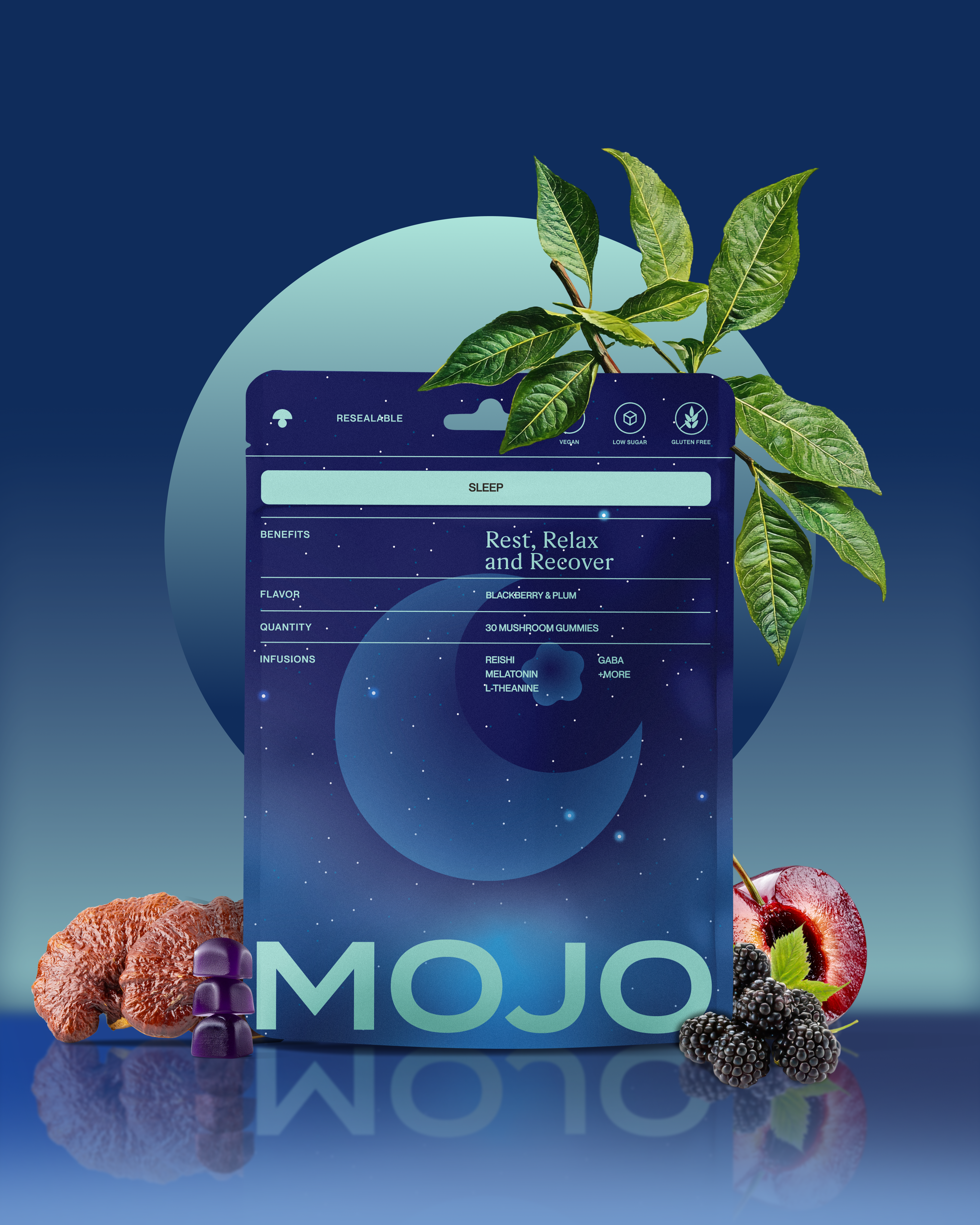
That's exactly why we created Mojo Sleep.
Not because sleep is time lost.
Because it's where tomorrow starts.
And maybe one other rule worth remembering:
Never make a major life decision after midnight.
Go to bed.
See if it's still a catastrophe in the morning.
Table of contents