Long before scientists knew what dopamine was, people were already eating a plant that could help the body make it.
And it might be one of the strangest plants on Earth.
Mucuna pruriens, commonly called the velvet bean, grows throughout tropical regions of the world. Its pods are covered in tiny hairs that can cause an extraordinarily intense itch when they touch your skin.
Seriously.
The hairs were once used to make itching powder. In 1985, a pair of fuzzy Mucuna pods caused such confusion in New Jersey that the people who found them, the paramedics who responded, and even a nurse who touched one of the patients subsequently developed itching.
But inside those deeply annoying pods is something much more interesting.
The seeds naturally contain L-DOPA.
And L-DOPA is one of the building blocks your brain uses to make dopamine.
A medicine before the science
This is where the story gets fascinating.
Preparations made from Mucuna have been used in traditional Indian medicine for centuries, including for conditions involving tremors and movement.
The people using it obviously didn't know about neurotransmitters.
They didn't know what dopamine was.
They couldn't see inside the brain.
They simply knew the plant did something.
It would take modern science a very long time to understand why.
In the early 20th century, scientists isolated L-DOPA from plants. By the late 1950s and early 1960s, researchers were beginning to understand dopamine's importance in the brain and its relationship to movement.
That eventually led to one of the most important neurological treatments of the modern era.
Levodopa, or L-DOPA, became the gold-standard treatment for Parkinson's disease.
And sitting inside the seeds of Mucuna pruriens?
The same molecule.
Modern clinical studies have since confirmed that Mucuna seed preparations can actually deliver meaningful amounts of L-DOPA into the body.
Which is pretty remarkable for a bean people had been using long before anyone knew what a neurotransmitter was.
But there's another part of the dopamine story that's relevant to almost everyone.
Because dopamine isn't simply about movement.
And despite what the internet often tells you...
it isn't really the "pleasure chemical" either.
Dopamine makes you want
For years, dopamine got simplified into something like this:
Do something enjoyable → brain releases dopamine → you feel happy.
Chocolate.
Sex.
Instagram.
Video games.
Dopamine became shorthand for pleasure.
But the real system is considerably more interesting.
Dopamine is deeply involved in motivation, learning, reward and goal-directed behaviour.
In other words, dopamine isn't only involved when you get something you want.
It's part of what makes you want to go get it in the first place.
Think about the difference between knowing you should do something...
and actually feeling able to begin.
The report needs writing.
The kitchen needs cleaning.
You should probably exercise.
There are 14 emails waiting for you.
Intellectually, you know exactly what needs to happen.
But knowing and doing are not the same thing.
Your brain needs systems that help determine:
This matters.
Pay attention to this.
Start.
Keep going.
The effort is worth it.
Dopamine plays an important role in those systems.
Which brings us back to focus.
Focus isn't just concentration
We tend to imagine focus as the ability to stare intensely at something.
But productive focus requires more than concentration.
First, you have to decide what deserves your attention.
Then you have to start.
Then you have to resist every other potentially more interesting thing competing for your attention.
Then you have to keep going long enough to actually finish.
That's why motivation and focus are so closely connected.
You can have all the time in the world and still accomplish absolutely nothing if your brain doesn't decide that the task in front of you is worth pursuing.
And that's part of what makes dopamine so interesting.
It's involved in the machinery behind pursuit.
Not simply feeling good.
Doing.
So where does Mucuna fit in?
This is one of the reasons we're fascinated by Mucuna at Mojo.
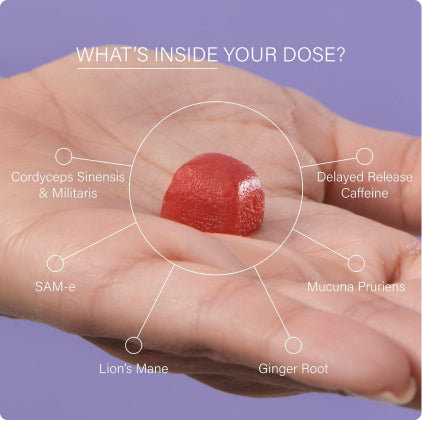
Mucuna pruriens naturally contains L-DOPA, a direct precursor your body can use to produce dopamine.
That's not some recently invented "brain hack."
It's unusual plant chemistry that humans have been interacting with for centuries.
And importantly, we shouldn't stretch the science further than it goes.
Much of the clinical research on Mucuna and L-DOPA has been conducted in people with Parkinson's disease. That doesn't mean eating Mucuna suddenly gives a healthy person superhuman concentration, and it shouldn't be treated as a replacement for medication or medical care.
But its biology is genuinely fascinating.
A strange tropical vine developed seeds containing a molecule that happens to sit directly inside one of the most important chemical pathways in the human brain.
Centuries ago, people began using those seeds without knowing why they worked.
Modern medicine eventually discovered dopamine.
Then L-DOPA became one of the most important neurological medicines ever developed.
And today we're still studying the plant that was making it all along.
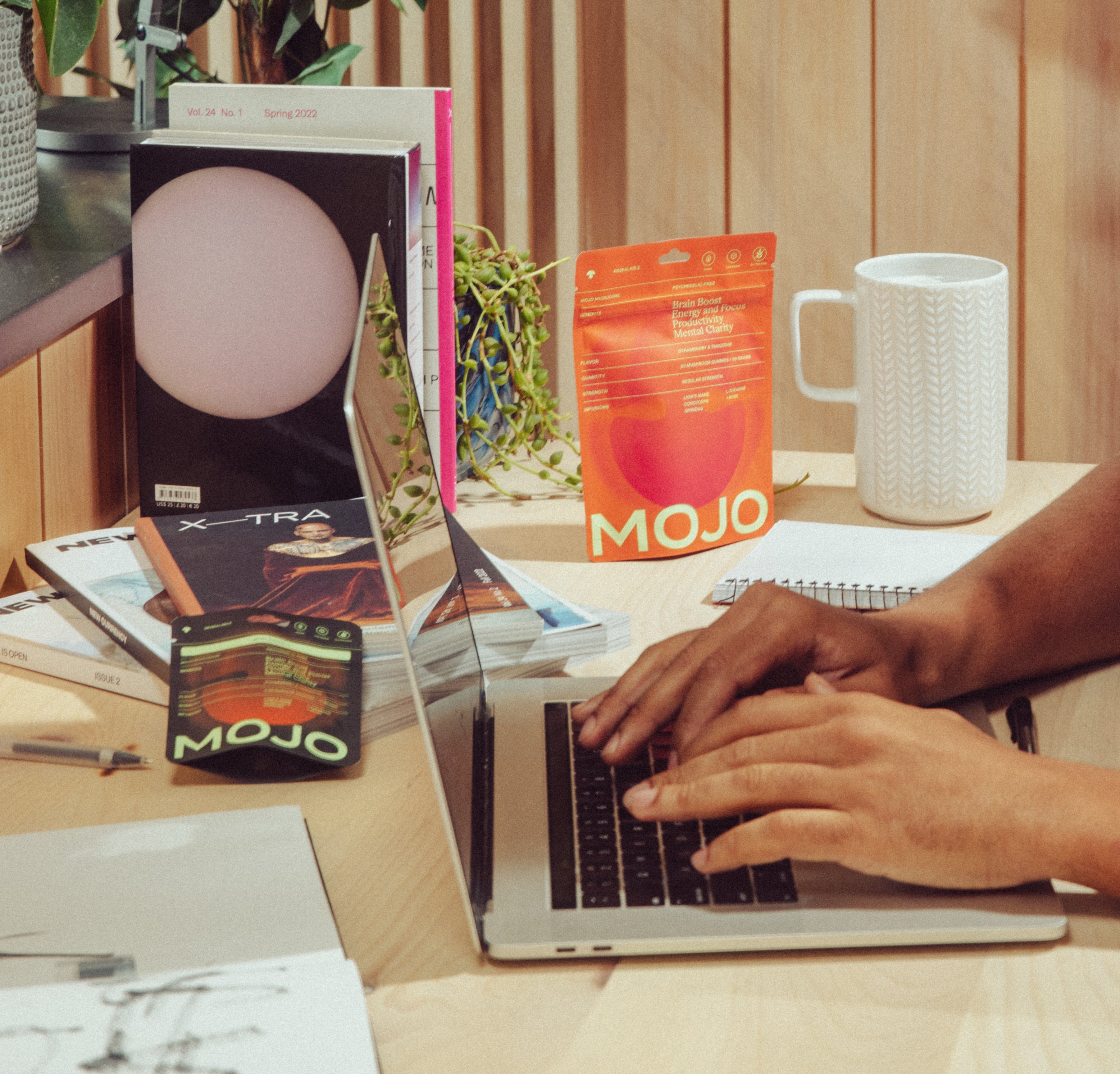
That's why Mucuna is one of the ingredients inside Mojo's Brain Boost Gummies.
Because sometimes an ingredient doesn't need a ridiculous promise to be interesting.
Its actual story is better.
Table of contents