For most of us, a good night’s sleep has a pretty simple definition.
You go to bed. You fall asleep. You stay asleep for seven or eight hours. You wake up in the morning.
And if you regularly wake up for an hour or two in the middle of the night, you probably assume something has gone wrong.
But for centuries, that may have been completely normal.
Long before alarm clocks, smartphones and electric lights, historical records describe people sleeping in a way that would seem strange to most of us today.
They slept twice.
The forgotten first sleep
Historian Roger Ekirch spent years studying how people experienced nighttime before the modern era.
While digging through diaries, medical texts, literature, court records and other historical documents, he kept encountering references to something called the “first sleep.”
At first, it didn't seem particularly remarkable.
Until he realized there was also a “second sleep.”
People would go to bed relatively early, often not long after darkness fell. They would sleep for several hours before waking sometime around the middle of the night.
And they didn't necessarily panic about being awake.
They expected it.
For an hour or two, people might pray, read, talk with their partner, tend the fire, reflect on dreams or simply lie quietly in bed.
Some got up.
Some visited neighbours.
Some had sex.
Then, eventually, they went back to bed.
That was their second sleep.
They would sleep for another few hours before getting up to begin the day.
What's fascinating is how casually historical sources seem to refer to this pattern. There was often no need to explain what “first sleep” meant because people already understood it.
It was simply part of the night.
So why don't we sleep like that anymore?
The obvious answer might be that humans changed.
But humans don't evolve very much in a few hundred years.
Our environment, however, changed enormously.
For most of human history, darkness was actually dark.
Once the sun disappeared, your options became considerably more limited. Candles and fires existed, of course, but illuminating a house was expensive, inconvenient and nothing like flipping a switch.
Then cities began lighting their streets.
Gas lighting spread through major cities during the 19th century. Electric lighting followed.
Suddenly, nighttime became usable.
People could work later. Shops could stay open. Social life could continue after dark. Homes became brighter and evenings became longer.
At roughly the same time, industrialization was changing our relationship with time itself.
Factories didn't particularly care when your body naturally wanted to wake up. Work increasingly started according to a clock.
Sleep had to fit around a standardized working day.
Gradually, the long night began to shrink.
Instead of going to bed relatively early, sleeping, waking for a while and sleeping again, people simply stayed awake longer and pushed their sleep into one consolidated block.
By the early 20th century, references to first and second sleep had largely faded from everyday language.
Eight uninterrupted hours became the ideal.
Then researchers tried something interesting
Centuries later, psychiatrist Thomas Wehr conducted an experiment that accidentally produced something remarkably similar.
Participants were exposed to long periods of darkness each night, much closer to the conditions humans would have experienced before artificial lighting.
After several weeks, their sleep began to change.
Rather than simply sleeping in one uninterrupted block, subjects tended to sleep for several hours, wake for a quiet period in the middle of the night, and then fall asleep again.
Two sleeps.
It looked surprisingly similar to the pattern Ekirch had been finding in historical records.
That doesn't necessarily mean segmented sleep is the one “natural” way humans are supposed to sleep. Sleep researchers still debate how widespread the historical pattern really was, and human sleep varies enormously across cultures, seasons and individuals.
But it does reveal something much more interesting.
Sleep isn't shaped by biology alone. It's shaped by the world we build around it.
And the world around sleep has changed dramatically.
We turned night into day
Artificial light didn't stop with the light bulb.
We put televisions in our living rooms.
Then computers in our offices.
Then laptops in our bedrooms.
Then we created a tiny glowing rectangle containing almost every piece of information and entertainment humanity has ever produced and started taking it to bed with us.
For our ancestors, darkness gradually removed things to do.
For us, nighttime removes almost nothing.
You can answer emails at 11:30 p.m.
Watch another episode at midnight.
Scroll TikTok at 12:45.
Read the news at 1 a.m.
Order something from the other side of the world at 1:15.
Your body may be approaching nighttime, but your environment is doing everything possible to convince your brain that the day is still happening.
And then, eventually, we put the phone down, turn off the light and expect ourselves to immediately fall asleep.
Maybe the lesson isn't that we should sleep twice
We're not suggesting everyone start waking up at midnight to tend the fire.
Modern life isn't designed around segmented sleep, and there isn't strong evidence that everyone would benefit from trying to recreate it.
The more useful lesson is that sleep has never existed in isolation.
Our surroundings matter.
Light matters.
Timing matters.
Routine matters.
What we do during the hour before bed matters.
And if we've spent the last few centuries getting increasingly good at extending the day, perhaps getting better sleep sometimes means deliberately creating an ending to it.
Dim the lights.
Put the phone somewhere else.
Let your brain get bored.
Build a routine that tells your body the day is actually finished.
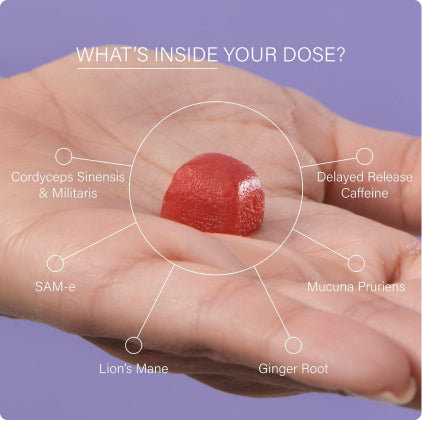
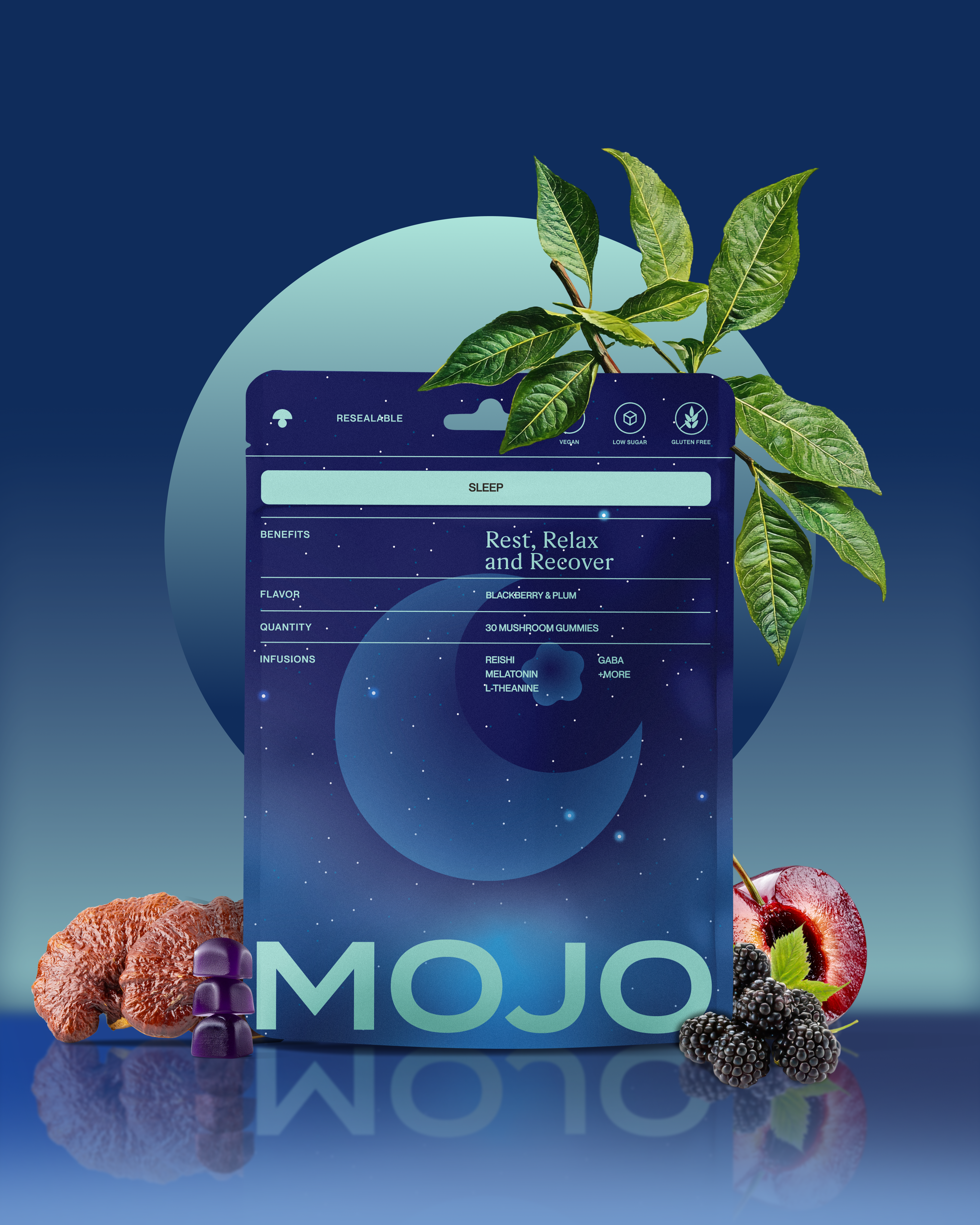
That's also why we created Sleep Mojo to fit into an evening wind-down routine, with functional ingredients designed to support relaxation and restful sleep without melatonin.
Because sometimes better sleep isn't about forcing yourself to sleep harder.
It's about giving your brain the right conditions to finally switch off.
Our ancestors had darkness.
We might have to create it ourselves.
Table of contents