Why the world's best teams stopped treating penalties like luck.
I love England.
Which means I've spent most major tournaments preparing myself emotionally for a penalty shootout.
If you're an England supporter, you know the feeling.
The match drifts into extra time. The tension builds. The commentators start mentioning penalty records. The camera finds nervous fans in the crowd. Somewhere in the back of your mind, you're already preparing for disappointment before the first kick has even been taken.
For decades, England and penalty shootouts felt like one of sport's most reliable tragedies.
The names changed. The managers changed. The generations changed.
The results rarely did.
England lost on penalties at the 1990 World Cup. Then Euro '96. Then the 1998 World Cup. Then Euro 2004. Then the 2006 World Cup.
Every defeat seemed to produce the same explanation.
The players lost their nerve.
They couldn't handle the pressure.
They lacked composure.
Sometimes people blamed mentality. Sometimes they blamed bad luck. Sometimes they simply shrugged and declared penalty shootouts a lottery.
After all, what else could explain it?
A penalty shootout takes place after more than two hours of football. Players are exhausted. The stakes are enormous. Millions of people are watching. Careers, reputations, and national expectations can hinge on a single kick.
Surely there must be an element of randomness.
And there is.
But far less than most people think.
The clue was sitting in plain sight.
While England kept losing, Germany kept winning.
Again and again.
Different players. Different managers. Different tournaments.
Same outcome.
As an England fan, I always assumed Germany were simply lucky.
Annoyingly, they weren't.
They were prepared.
Germany approached penalties differently. While many teams treated penalty shootouts as an event, Germany treated them as a skill.
That distinction sounds small, but it changes everything.
Most teams practiced penalties occasionally.
Germany studied them.
They collected data. They analyzed behaviour. They examined patterns. They built routines. They prepared players psychologically for the moment before it arrived.
While others talked about courage, Germany focused on preparation.
Over time, sports scientists began doing the same thing.
Researchers started examining thousands of penalty kicks, trying to understand what separated success from failure. What they discovered challenged many of the assumptions people held about pressure and performance.
Players who committed to a decision early tended to perform better than players who hesitated.
Consistent routines improved outcomes.
Body language mattered.
Goalkeepers could influence decisions through subtle psychological tactics.
Even where a player looked before striking the ball could affect the result.
What appeared chaotic often contained patterns.
What appeared random often contained preparation.
Perhaps the most interesting discovery was what pressure actually does to people.
Most of us imagine pressure as a force that transforms us. We picture ourselves rising to the occasion when the moment demands it. We imagine hidden reserves of confidence suddenly appearing when the stakes are highest.
The reality is usually less dramatic.
Pressure doesn't create performance.
Pressure reveals it.
Under stress, people tend to fall back on whatever they've practiced most often. The brain looks for familiar patterns. Habits become more important. Routines become more important. Preparation becomes more important.
The player standing over a penalty spot isn't creating confidence from nowhere.
He's relying on thousands of repetitions that came before that moment.
The shootout simply reveals what was already there.
And that's where the story stops being about football.
Because the same principle applies almost everywhere.
Most people spend their lives waiting for the moment they'll finally feel ready.
Ready to start the business.
Ready for the interview.
Ready for the presentation.
Ready for the difficult conversation.
Ready to focus.
Ready to perform.
But if penalty shootouts teach us anything, it's that readiness isn't usually created in the moment.
It's built beforehand.
The people who perform well under pressure rarely rely on motivation. They rely on systems.
That's true in elite sport.
It's true in business.
It's true in school.
And it's true in everyday life.
The thing that struck me most about the penalty research wasn't what it revealed about football.
It was what it revealed about the rest of us.
We spend a surprising amount of time searching for confidence when we should be building preparation.
We look for motivation when we should be building routines.
We look for breakthroughs when we should be collecting small advantages.
The world's best athletes understand this instinctively.
That's why modern sport has become obsessed with marginal gains.
Sleep.
Recovery.
Nutrition.
Mental preparation.
Focus.
Not because any single factor guarantees success, but because each one improves the probability of performing well when the moment matters.
The interesting thing is that elite athletes no longer think exclusively about physical performance.
Increasingly, they think about cognitive performance too.
How clearly can they think under pressure?
How effectively can they process information?
How well can they stay focused when stress levels rise?
How consistently can they make good decisions when the stakes are highest?
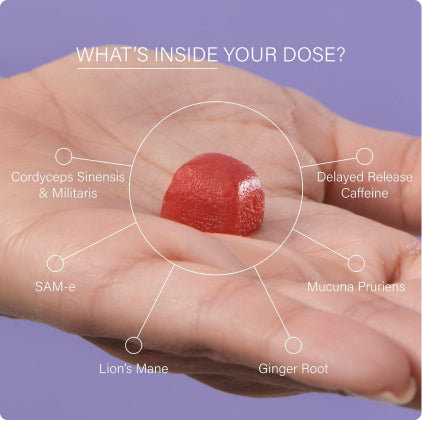
It's one reason compounds like Lion's Mane have attracted growing interest among athletes, entrepreneurs, students, and other high performers. Research into Lion's Mane has explored areas such as cognitive function, memory, and mental clarity. While no supplement can replace preparation, training, or discipline, it's easy to understand why people are interested in anything that may help support the brain's ability to perform consistently when it matters most.
Because that's ultimately what performance is.
Not a single moment.
Not a burst of motivation.
Not a flash of inspiration.
A system.
A collection of habits, routines, and behaviours that increase the likelihood of success over time.
The funny thing about penalty shootouts is that they still feel like luck when you're watching them.
A ball travels one way.
A goalkeeper dives the other.
The margins are tiny.
But beneath that moment sits years of preparation.
Years of habits.
Years of repetition.
Years of creating conditions that increase the odds of success.
That's why the world's best teams stopped treating penalties like luck years ago.
And it's probably why the rest of us should stop treating performance that way too.
Because whether you're taking a penalty in front of 80,000 people, walking into a job interview, delivering a presentation, writing an exam, building a business, or simply trying to stay focused through a busy week, the principle is the same.
The goal isn't to become extraordinary when pressure arrives.
The goal is to build a system that makes extraordinary performance more likely.
Long before the whistle blows.
Table of contents