Watch Lionel Messi for five minutes and you’ll notice something strange.
He barely seems to be running.
At least not in the way most people expect from an elite footballer.
He walks. He drifts. He scans. He looks over one shoulder, then the other. He moves a few yards, slows down, checks again, waits, and then suddenly the ball arrives and the whole game seems to bend around him.
It can almost look lazy if you don’t know what you’re watching.
But that’s the trick.
Messi isn’t doing less because he can’t do more.
He’s doing less because he already knows more.
And that may be the real secret to why he has aged so well.
When Messi was younger, the conversation was mostly about his dribbling. The low centre of gravity. The acceleration. The impossible balance. The way he could take three touches in the space where most players could barely take one.
He was electric.
But as players age, one thing inevitably changes.
Speed fades.
Explosiveness fades.
Recovery gets harder.
You can fight it. You can train brilliantly. You can manage your body with obsessive detail. But you cannot outrun biology forever.
Which is what makes Messi so interesting.
Because his game was never only about athleticism.
It was always about perception.
Messi has always seen the game before everyone else.
He scans constantly. Before receiving the ball, he already knows where the defender is, where the space is, where the pressure is coming from, and where the next pass should go.
That means he does not need to react as much as other players.
He has already done the work.
The best players are not always the ones who move fastest after the ball arrives.
They are the ones who gathered the most information before it did.
That is why Messi can look slow and still control everything.
He does not need to sprint into space if he has already found the right pocket.
He does not need to beat three players with raw speed if he has already positioned his body to take them out of the game with one touch.
He does not need to force the moment because he understands where the moment is going.
His brain buys time that his legs no longer can.
This is also why comparing Messi and Ronaldo as they age is so fascinating.
Ronaldo was one of the greatest athletes football has ever seen. Power, speed, jumping ability, explosiveness, finishing, physical dominance. At his peak, he felt almost engineered for the modern game.
But physical gifts are harder to preserve with age.
Messi, of course, had physical gifts too. You do not become Messi without them. But his deepest advantage was never just physical. It was cognitive.
He solved the game.
And when your edge is based on reading, scanning, timing, anticipation, and decision-making, it tends to last longer.
Because football is not just a physical sport.
It is a thinking sport played at high speed.
The players who survive longest are often the ones who learn how to reduce the physical burden by increasing the cognitive one.
They know when not to run.
They know when to wait.
They know when one touch is better than five.
They know how to make the game simpler.
That sounds easy, but it is incredibly difficult.
Most players chase the game.
Messi lets the game come to him.
And there is a lesson in that far beyond football.
We often think performance means doing more.
More effort.
More hours.
More intensity.
More grind.
But some of the best performance comes from seeing more clearly.
Making better decisions.
Reducing unnecessary movement.
Staying calm enough to notice what others miss.
In football, that means finding the pass before the pressure arrives.
In life, it might mean staying focused through a long workday, making sharper decisions when you are tired, or not getting pulled in ten different directions by every distraction around you.
That is why cognitive performance matters.
Because your brain is not separate from performance.
It is the beginning of it.
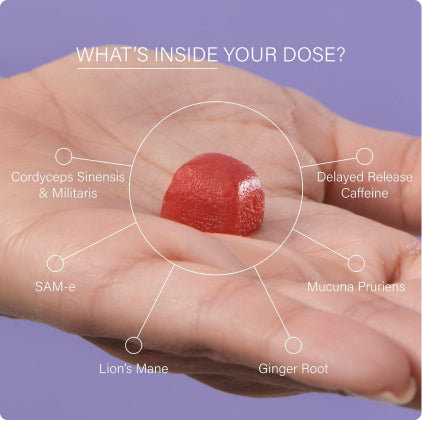
This is also why ingredients like Lion’s Mane have become so interesting. Not because they magically turn you into a genius overnight, but because more people are starting to understand that focus, clarity, and mental sharpness are not soft benefits.
They are performance benefits.
The clearer your mind is, the better everything else works.
Messi is not still great because he is faster than he was at 24.
He is still great because he sees things earlier.
He processes the game faster.
He wastes less energy.
He makes better decisions.
And when you really understand that, the lesson is obvious.
Peak performance is not always about moving faster.
Sometimes it is about seeing the game before everyone else does.
That is what Messi has always done.
And that is why he is still Messi.
Table of contents