There’s something about the beginning of September that makes you want to get your life together.
The air gets a little cooler, the days get shorter, summer vacations end and kids go back to school. Suddenly you’re thinking you should probably start going to bed earlier, get back to the gym, clean the house, eat like a normal person again and finally finish that thing you’ve been putting off since June.
We tend to think of this as a modern phenomenon, probably the lingering psychological effect of spending the first couple of decades of our lives going back to school every September.
And that’s definitely part of it.
But humans have been treating fall as “get your shit together” season for much, much longer than we’ve had school calendars.
For most of human history, getting your shit together in fall wasn’t self-improvement. It was survival.
Winter is coming
Long before supermarkets, central heating and overnight delivery, the end of summer represented a very real deadline.
If you lived somewhere with cold winters, autumn was when the harvest had to come in, food had to be preserved, grain had to be dried and stored, animals had to be prepared for the colder months, firewood had to be collected and homes had to be repaired before the weather turned.
There was no procrastinating until January and announcing that this was finally going to be your year. Winter did not care about your goals.
Summer had been a period of growth and relative abundance. Fall was when you took what you had and prepared yourself for what was coming next.
That rhythm became deeply embedded in cultures around the world.
The ancient Greeks held festivals connected to agriculture and the harvest. The Romans organized much of their religious and civic calendar around agricultural cycles. Across northern Europe, communities gathered crops, preserved food and celebrated the completion of the harvest before winter arrived.
The traditions differed enormously from place to place, but the basic rhythm was remarkably consistent: grow during the warmer months, gather what you can, prepare for winter and begin again when the seasons changed.
Autumn wasn't just another aesthetic season.
It reorganized life.
Then we got really good at ignoring the seasons
Modern civilization has done an extraordinary job of making the seasons matter less.
Industrialization changed how and where we worked. Electricity allowed us to stay awake and productive long after sunset. Central heating meant a freezing January night could feel like June inside your living room. Modern agriculture, refrigeration and global supply chains mean you can buy strawberries in Toronto in February without thinking twice about how strange that would have seemed for almost all of human history.
In many ways, we've engineered a world where every month can feel roughly the same.
But the outside world hasn't stopped changing.
As fall approaches, daylight starts disappearing earlier and temperatures begin to drop. Vacations end, schools reopen, workplaces get busier and social routines change. Even in a world where most of us aren't desperately stacking firewood before the first frost, September still brings a very obvious environmental and cultural message:
Summer is ending. Something different comes next.
Now, that doesn't mean your sudden urge to organize the garage is some ancient genetic memory of your great-great-great-great-grandfather preparing his family for winter.
Human behaviour is considerably more complicated than that.
But there is something fascinating about how powerfully seasonal transitions continue to organize our lives, even after we've removed many of the practical reasons they once needed to.
Then we added school
On top of all that ancient seasonal rhythm, modern life gave September another incredibly powerful association: starting over.
For more than a decade of your early life, September meant a new grade, a new teacher, a new classroom, new clothes, new notebooks and a completely new routine. Every year, summer ended and structured life began again.
Maybe you even got a new pencil case you were intensely excited about for approximately four days.
Then you grow up.
Nobody gives you a new timetable anymore. You don't get a fresh set of notebooks. And unfortunately, buying an entirely new wardrobe because September is approaching becomes considerably harder to justify.
But the feeling remains.
Researchers studying what's known as the Fresh Start Effect have found that meaningful temporal landmarks can make people more motivated to pursue goals. Birthdays, Mondays, the beginning of a month and, most famously, January 1st can create psychological boundaries between different periods of our lives.
Essentially, there was the version of you before this moment, and there can be a slightly different version after it.
January gets most of the attention, but September has an unusually powerful collection of those signals happening simultaneously.
The season changes. Summer ends. Vacations finish. School starts. Routines return.
No wonder you suddenly feel like getting your life together.
Maybe we should use it
Modern life encourages us to treat every week roughly the same. We work under the same artificial lights, stare at the same screens, shop at the same grocery stores, wake up to the same alarms and receive the same endless stream of notifications regardless of whether it's February or August.
But human life has never really worked that way.
We've always had seasons. Periods of activity and rest, abundance and scarcity, exploration and preparation. The circumstances have changed dramatically, but perhaps there's still something useful about allowing the seasons to create boundaries in our lives.
That doesn't mean September needs to become January 1st with better weather.
You don't need to reinvent yourself, build a 5 a.m. morning routine, delete every app from your phone, start training for a marathon and meal-prep 14 identical containers of chicken and broccoli.
Just use the moment.
If summer knocked your sleep sideways, start getting it back on track. If your routine disappeared, rebuild some structure. If your focus has been scattered, think about what might help you get it back. And if you've spent the last two months eating and drinking like every weekend is a long weekend, your gut probably wouldn't object to a little attention either.
Our ancestors used fall to prepare themselves for the season ahead. Thankfully, the consequences of us failing to do that are considerably less dramatic.
But thousands of years later, that familiar feeling still arrives.
The air gets cooler, the days get shorter, September appears on the calendar and somewhere inside you a little voice says:
Alright. Time to get your shit together.
We say listen to it.
The Fall Reset
For a limited time, get 25% off the entire Mojo range.
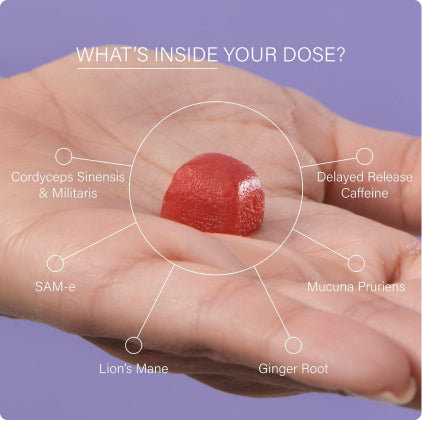
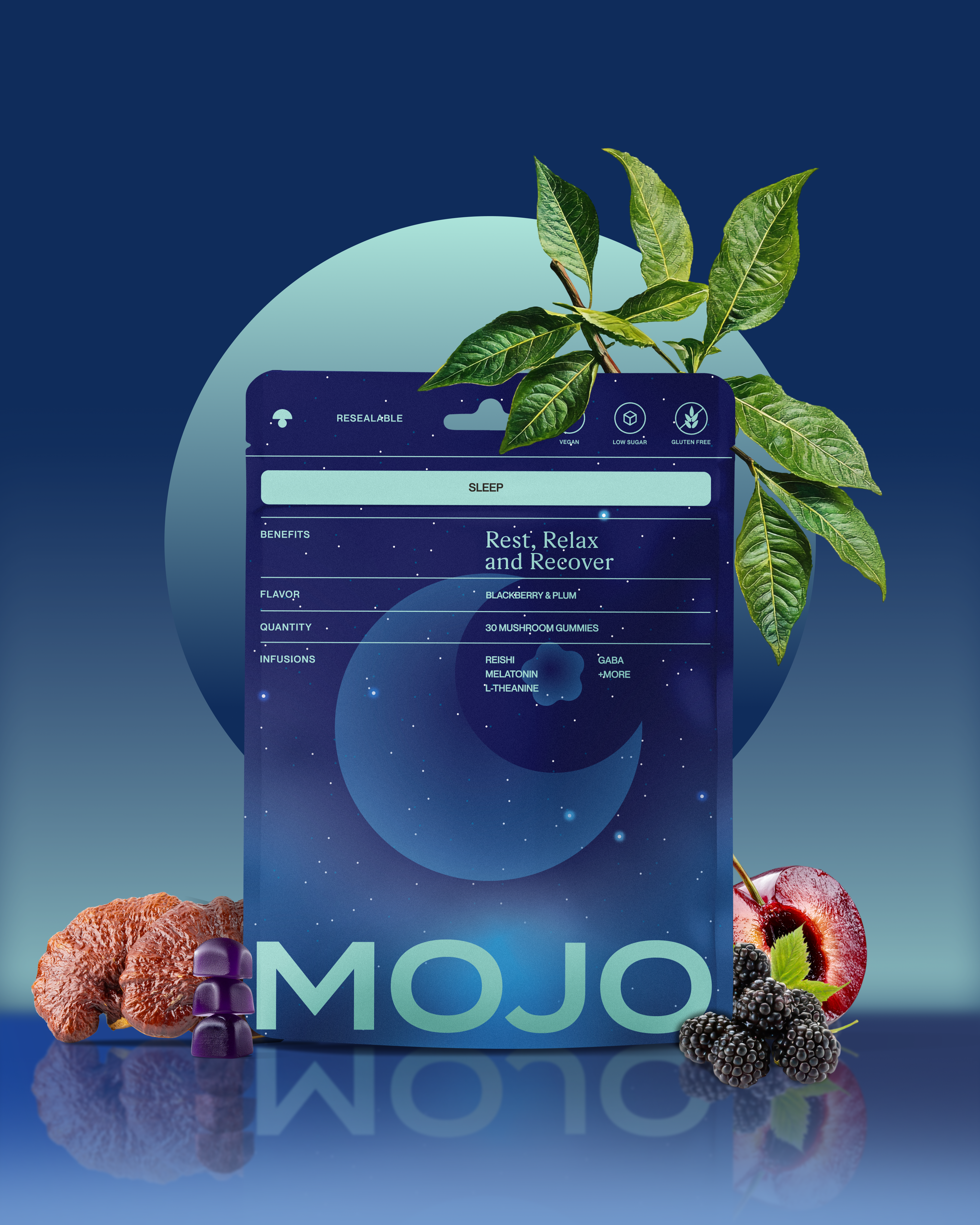
Whether you're resetting your focus, energy, sleep, gut or simply trying to get back into a routine after summer, we've got a Mojo for that.
Whatever you're resetting this fall, start with Mojo.
Table of contents