Every December, millions of people enter their “New Year, New Me” era. And by February?
Eighty percent of resolutions have already fizzled out. Not because people are lazy, flawed, or undisciplined, but because the human brain is hilariously bad at the way we usually set goals.
Good news: data shows there are a few tiny tweaks that make your odds of success skyrocket. And they’re not the boring “SMART goals” advice you’ve heard a hundred times.
Here is a goal-setting system even your future self will high-five you for.
1. Make Your Goals Smaller (Like… Way Smaller)
Studies from Duke University show that 45 percent of our daily actions come from habits, not willpower. Willpower is flaky. Habits are automatic.
So instead of “run 5km every morning,” start with:
-
Put on running shoes
-
Walk for 3 minutes
-
Turn around
It sounds ridiculous, yet people who shrink goals down to “starter steps” have over 80 percent higher habit retention after two months. Small goals don’t feel impressive, but they stack.
2. Make the Reward Immediate (Your Brain Demands It)
Your brain evolved to love instant gratification, not delayed outcomes like “better health in six months.” If the reward is too far away, you won’t stick with the behaviour.
Bring the reward closer.
-
Work out and let yourself watch your favourite show only during workouts
-
Pair reading with your best coffee ritual
-
Use tools that create an immediate payoff for focus and clarity
Immediate rewards make habits sustainable. Delayed rewards make them theoretical.
3. Turn Your Goal Into an Identity, Not a Task
Stanford research shows people are dramatically more likely to follow through when goals become part of how they see themselves.
Examples:
-
“I am a reader” instead of “I will read more”
-
“I am a runner” instead of “I want to run”
Identity creates consistency. Tasks create pressure.
4. Make It Too Easy to Fail (This Works Shockingly Well)
People who succeed with resolutions build friction traps—small blockers that make the old habit annoying and the new one easy.
-
Hide distracting apps
-
Put junk food out of reach
-
Set out your workout clothes the night before
-
Keep supplements somewhere you can’t miss
Behaviour researcher BJ Fogg shows that adding or removing just a little friction can change a habit almost overnight.
5. Track Progress, Not Perfection
Motivation doesn’t come from goals. It comes from momentum.
Harvard research shows the biggest motivator in daily life is simply the feeling of making progress.
Track streaks. Celebrate micro-wins. Give yourself visible proof that things are moving forward.
Perfection kills consistency. Progress builds it.
6. Make Your Goals Social
People who share their goals or work toward them with others have up to 95 percent completion rates, according to research from the American Society for Training and Development.
Not because of shame, but because humans hate letting others down.
Tell a friend. Join a group. Start a habit with your partner.
7. Use Dopamine to Your Advantage
Everything about habit-building comes back to dopamine. When dopamine is stable, goals feel doable. When it’s low, everything feels overwhelming.
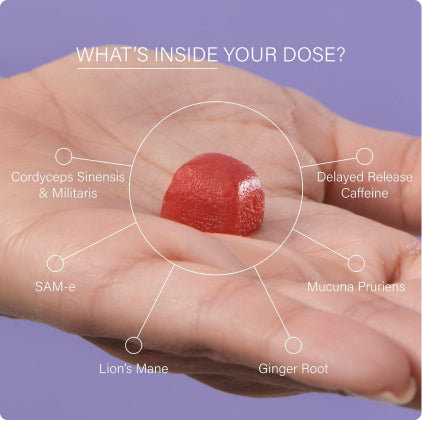
Natural dopamine support—exercise, sleep, sunlight, protein, and adaptogens like Lion’s Mane or Ginseng—makes sticking to goals easier because your brain chemistry finally matches your intentions.
When your brain feels good, your goals feel possible.
So What’s the Real Key?
It isn’t discipline.
It isn’t motivation.
It isn’t “trying harder.”
It’s designing your identity, environment, and brain chemistry so success becomes the path of least resistance.
If your goals feel hard, shrink them.
If they feel far away, reward yourself sooner.
If they feel lonely, share them.
If they feel impossible, fix the chemistry before you fix the habit.
This year, don’t reinvent yourself.
Just make it easier to become the person you already want to be.
Table of contents